 Shu Guang
Shu Guang
Shu Guang
High-Breaking Capacity Engineering, Global Standards Compliance, and Custom Protection Solutions for Critical Utility & Industrial Infrastructure
Explore our precision-engineered range of currents-limiting HRC fuses, expulsion links, and auxiliary equipment compliant with key international standards.
Analyzing the shift from traditional distribution systems to complex smart grids, renewable integrations, and high-performance safety infrastructures.
Modern electrical grids operate under stringent thermal dynamic stresses due to increasing bidirectional electricity flows from distributed energy resources (DERs). Overcurrent protection equipment must mitigate risks with high speed and precision. Traditional fuse links must adapt to transient load profiles, demanding tighter tolerance limits and improved pre-arcing performance.
Wind power, utility-scale photovoltaic solar parks, and battery energy storage systems (BESS) require specialized medium-voltage protection. High-voltage current-limiting HRC fuses are critical to isolate faults on the AC and DC networks within switchgears, helping prevent cascading failure sequences across sub-distribution nodes.
Chemical processing plants, metallurgical facilities, and transportation infrastructures place severe environments on fuse operations. Corrosive gases, wide thermal shifts, and high vibration mean housing components need polymeric encapsulation or heavy porcelain builds to protect silver links and quartz sand filling.
Understanding how localized manufacturing clusters in China drive high material integration, research velocity, and unparalleled cost-to-quality efficiencies.
Yueqing in Zhejiang Province is recognized as the electrical manufacturing capital of China. By centralizing raw material refining, automated ceramic body pressing, high-precision metallurgical wire drawing, and calibration laboratories, the Yueqing industrial cluster achieves significant supply chain integration.
For international buyers looking for OEM Medium Voltage Fuses, this ecosystem minimizes turnaround times and optimizes manufacturing steps. Components like pure silver elements, high-grade steatite tubes, and copper end-caps are processed locally under strict quality protocols, ensuring that custom requirements are fabricated without supply chain bottlenecks.
Advanced equipment, including CNC lathe machining, automatic sand-filling vibration stations, and precision resistance welding, guarantees uniform internal parameters. Consistent internal contact resistance is vital: variations of a few milliohms can alter the time-current curve ($I-t$) and cause premature fuse operations under normal current cycles.

Detailing structural layers and material science that define reliable breaking capabilities and safe arc-extinction characteristics.
The core conductive link utilizes 99.99% pure silver (Ag) ribbon. We apply engineered cross-section reductions (notches) designed with metallurgical expertise. Under overload or fault conditions, these points melt first, establishing multiple controlled electric arcs along the length of the fuse link to lower energy dissipation during interruption.
We fill the internal chamber with high-purity, double-washed, heat-treated quartz sand ($SiO_2$). The exact grain size distribution is key: it provides optimal thermal dissipation during normal operations and melts instantly into non-conductive fulgurite when hit by an arc, quenching it by absorption of energy.
Using high-density ceramic tubes (C110/C120 steatite or alumina-silicate), our fuses withstand massive internal pressure rises during fault clearing. These bodies resist thermal shock, preventing fracture risks and ensuring that gases do not vent into surrounding switchgear compartments.
| Fuse Type & Standard | Rated Voltage Range (kV) | Rated Current Range (A) | Max Breaking Capacity (kA) | Primary Industrial Application |
|---|---|---|---|---|
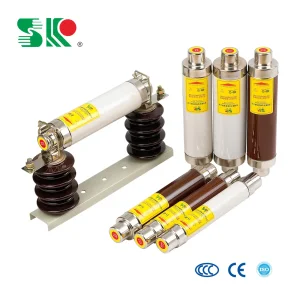
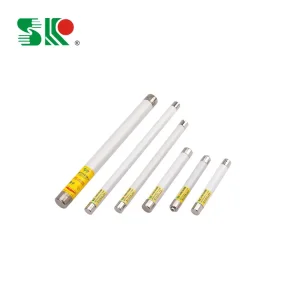
| DIN Standard HRC Fuses (IEC 60282-1) | 3.6 / 7.2 / 12 / 24 / 36 kV | 6.3 A to 315 A | 50 kA / 63 kA | Transformer Protection / Switchgear Modules |
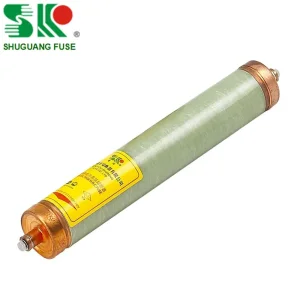
| Oil-Immersed Backup Fuses | 12 kV to 24 kV | 6.3 A to 100 A | 40 kA | Oil-immersed Distribution Transformers |
| Voltage Transformer Protection (XRNP) | 3.6 kV to 40.5 kV | 0.5 A to 3.15 A | 100 kA | Auxiliary Voltage Transformer Circuit Safety |
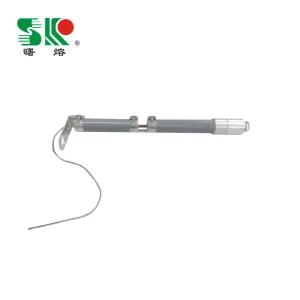
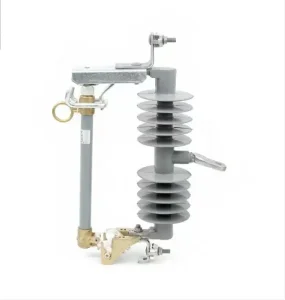
| Expulsion Fuse Links (ANSI C37.42) | 11 kV to 33 kV | 1 A to 200 A | 12 kA | Outdoor Drop-Out Cutouts |
Our products are engineered, tested, and certified to perform under strict international specifications.
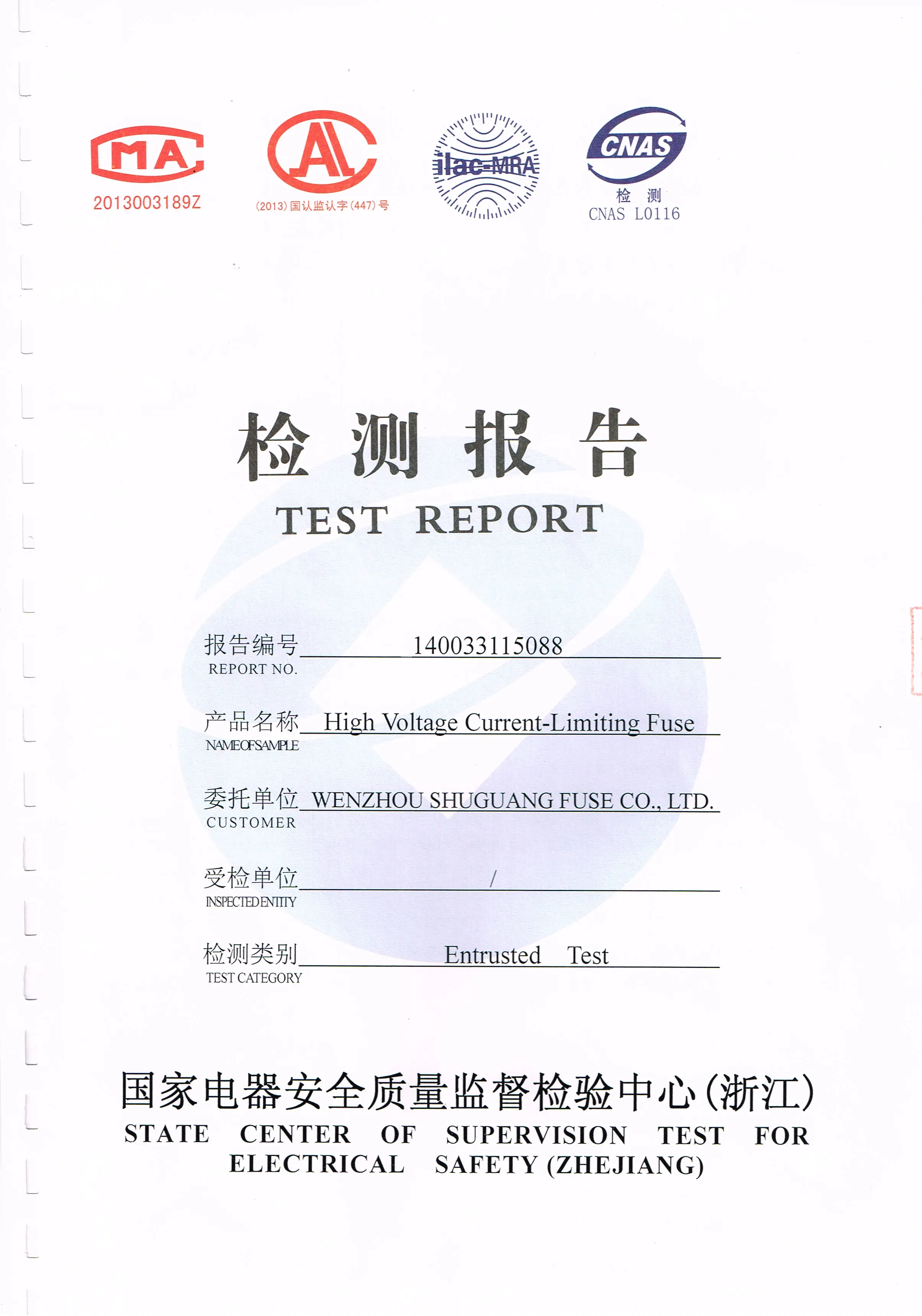
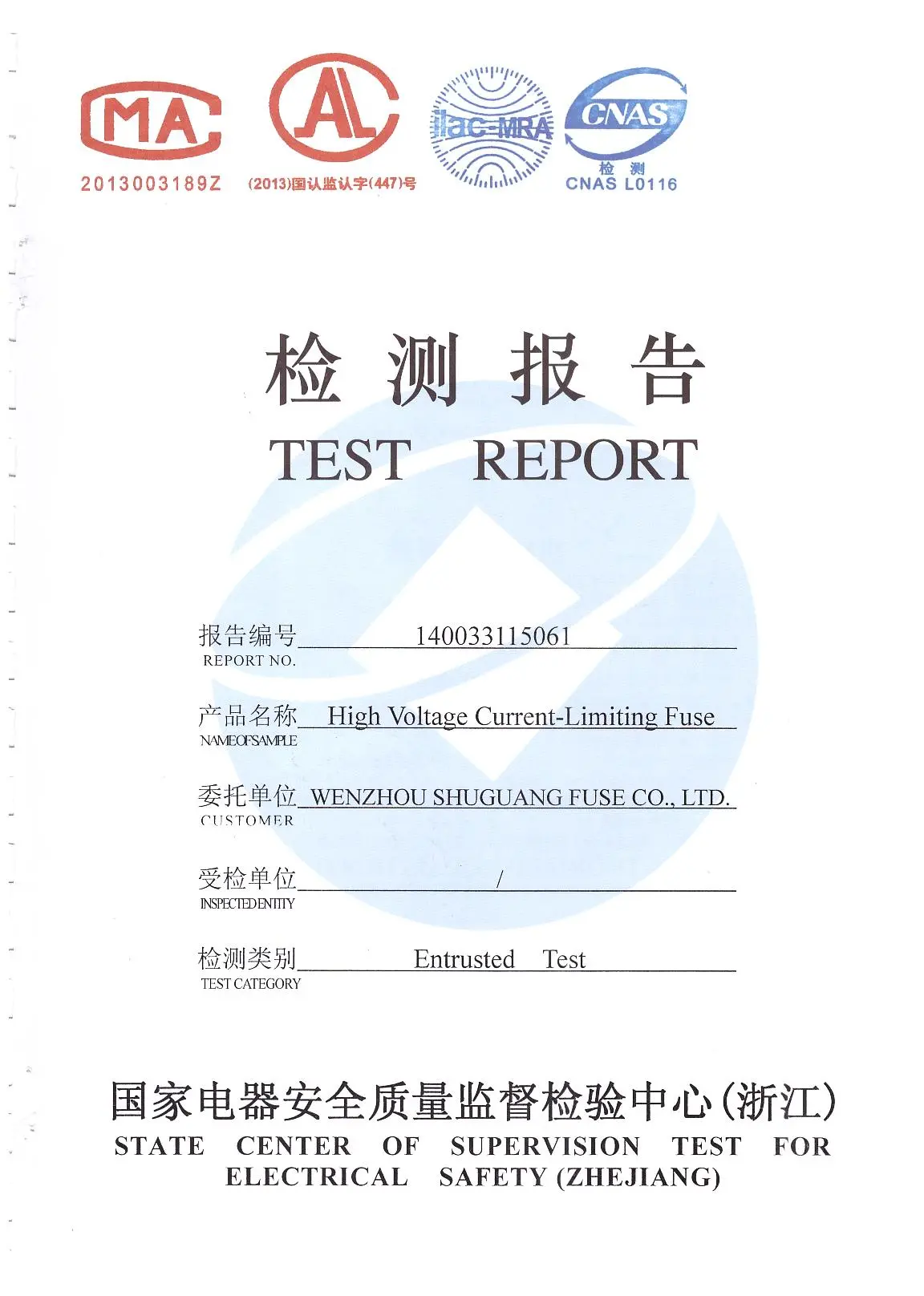
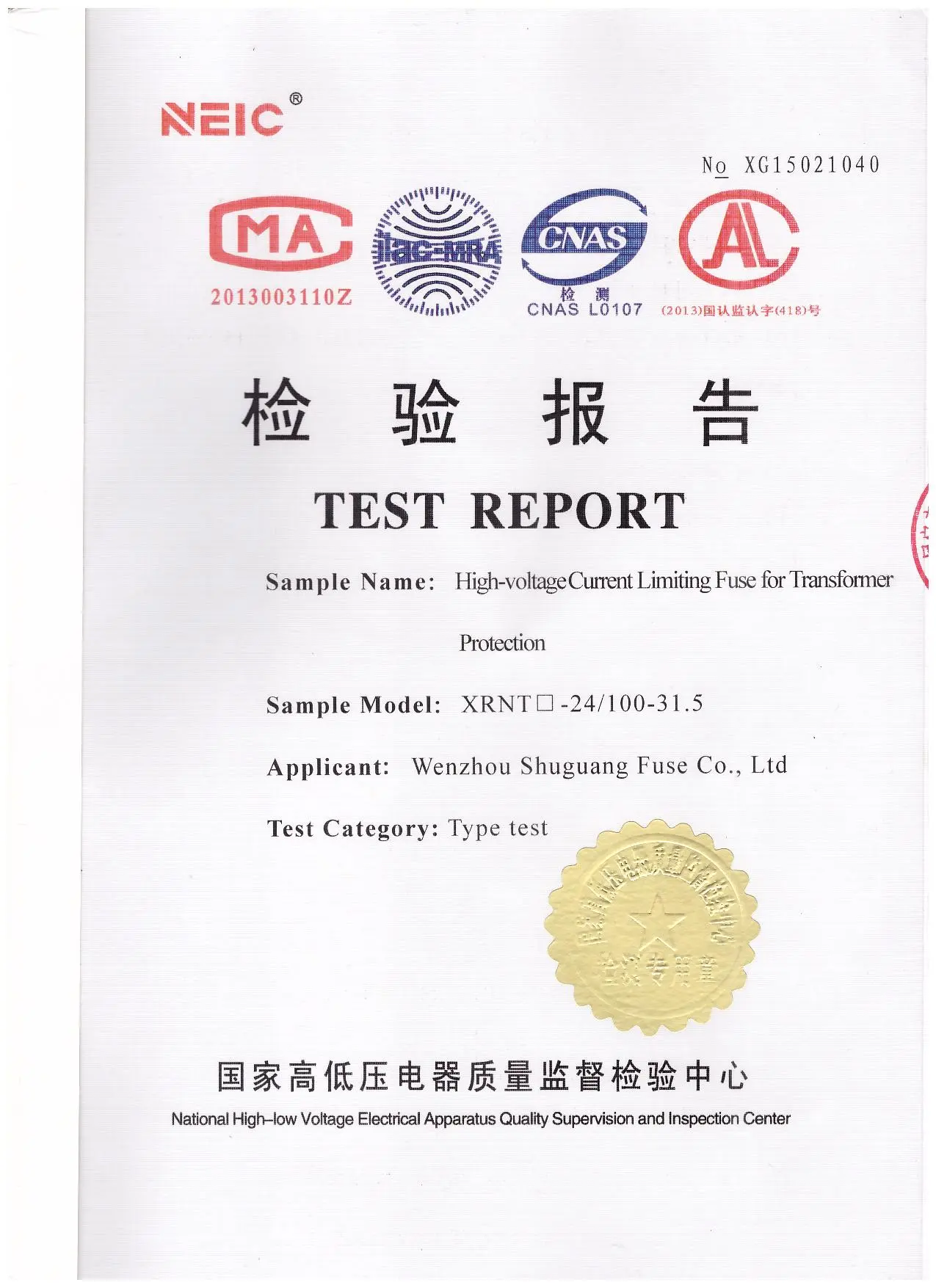
Wenzhou Shuguang Fuse Co., Ltd. produces medium and high-voltage electrical equipment under strict certification frameworks. Our systems are certified to ISO 9001:2000, with design profiles fully compliant with ANSIC37.42, DIN43625, BS2692, IEC60282-1, IEC60644, IEC60470, and VDE0636.
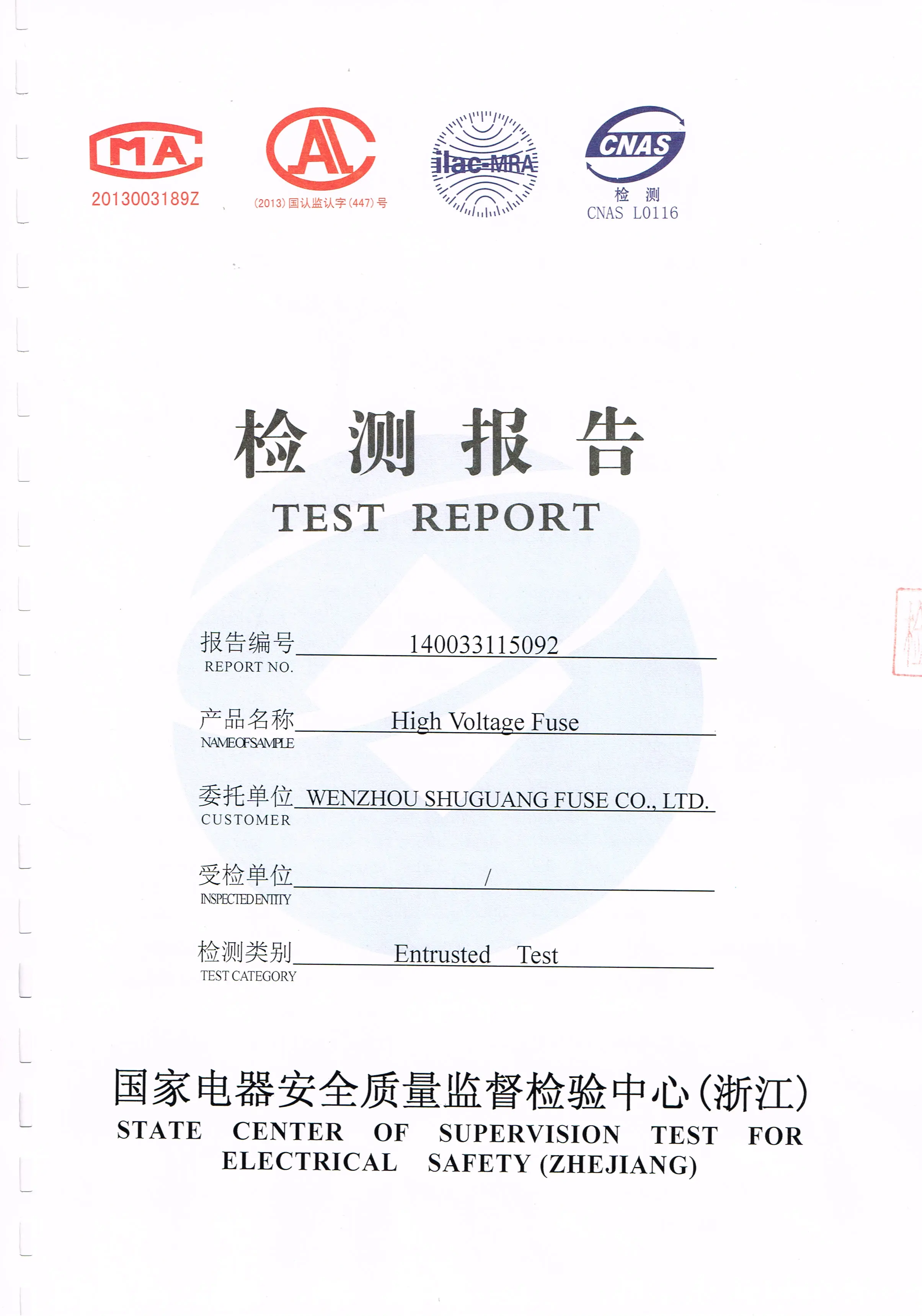
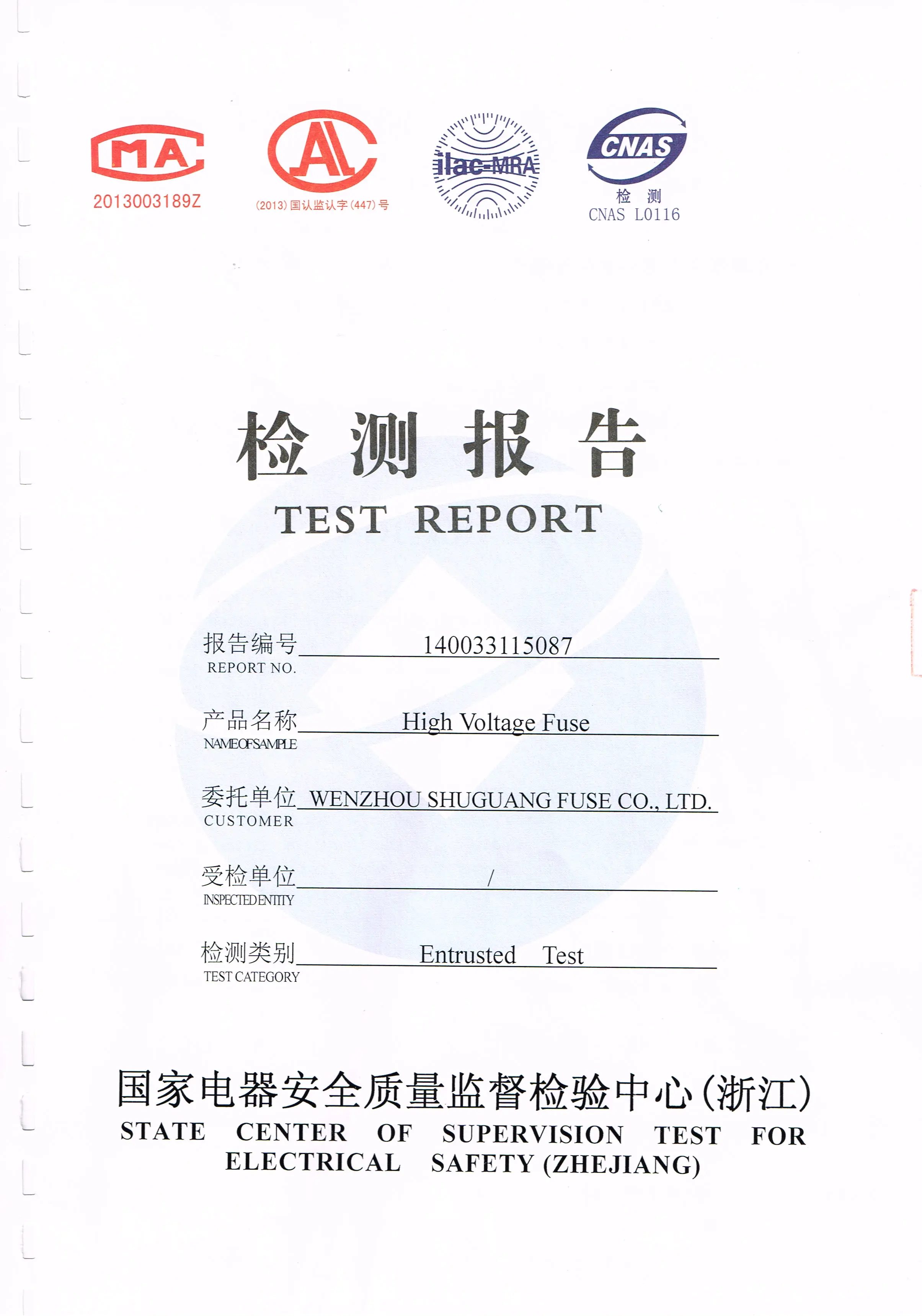
All safety and current-breaking characteristics are tested at specialized evaluation laboratories, including the National High-voltage Electrical Apparatus Quality Supervision and Inspection Center, the Electric Power Research Institute of the Ministry of Electric Power, and the Xi'an High-voltage Electrical Apparatus Research Institute. This technical oversight ensures our fuses deliver reliable overcurrent isolation and long-term performance.
From urban substation enclosures to remote solar grid feeds, our medium voltage fuses protect systems globally.
Ensuring uninterrupted power supply to residential and commercial sectors. High-voltage current-limiting DIN fuses are paired with vacuum contactors or gas-insulated switchgears (GIS) to isolate faulty transformer units without destabilizing upstream feeder configurations.
Capacitor installations generate substantial energy discharge threats under internal foil breakdown conditions. Specialized tail-wire capacitor protection fuses clear high-frequency fault currents within microseconds, preventing cell casing explosions.
Renewable energy generation involves cyclic heating and cooling profiles. Our fuses are tested to handle repetitive load fluctuations, reducing thermal fatigue on silver links to ensure long operational lifetimes.
Technical checklist for Engineering, Procurement, and Construction (EPC) managers and distribution utility planners.
When auditing high-voltage component factories, check the following credentials:
Answers to common engineering questions regarding the application, parameters, and design of medium voltage current-limiting fuses.
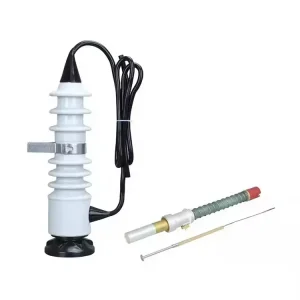
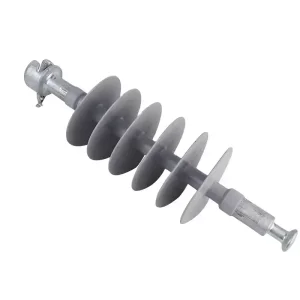
Secondary product inventory, including transformer backup units, expulsion cutout assemblies, and polymer isolator systems.
Over three decades of manufacturing experience and engineering development in electrical protection components.
Founded in 1992 as Yueqing Shuguang Fuse Factory, we have grown into a power technology enterprise that integrates engineering research, development, high-volume production, sales, and custom services. Based in Yueqing, Zhejiang Province, our facility operates in one of the world's most concentrated centers for electrical engineering components.
Through decades of manufacturing development, the "Shu Rong" brand has built a solid reputation among domestic and international utility clients. We prioritize process controls, sourcing quality raw materials, and using calibrated testing equipment to verify the performance parameters of every fuse manufactured.
Our products are supplied to provincial power companies throughout China and exported to markets in Southeast Asia, the Middle East, Africa, and Europe. We welcome global partners to discuss custom OEM configurations, safety compliance requirements, and distribution relationships to support modern power grid projects.