
Shu Guang Shu Guang

How to Choose the Best Lightning Arrester from China?

Time:2026-10-14 Author:Amelia
0%

Choosing the best Lightning Arrester from China requires more than comparing prices, photos, or advertised discharge capacity. The right selection protects equipment, supports stable operation, and fits the actual electrical system. A factory may offer attractive specifications, yet those numbers can be misunderstood without testing evidence and application details. This guide examines design, materials, certification, factory experience, customization, and after-sales support.

Dr. Martin A. Uman, a respected lightning researcher, described lightning as “the most spectacular and dangerous natural phenomenon.” That observation still matters when evaluating surge protection. A Lightning Arrester must respond quickly to transient overvoltage, withstand repeated impulses, and coordinate with upstream protection. Buyers should review rated voltage, maximum continuous operating voltage, nominal discharge current, residual voltage, and environmental performance. IEC 60099-4 compliance is important for many metal-oxide surge arresters, but a certificate alone does not prove consistent manufacturing quality.

Practical experience also changes the decision. Inspect the zinc-oxide varistor design, sealing method, housing material, and production controls. Ask for routine test records, type-test reports, traceability documents, and clear warranty terms. Visit the factory when possible. Check how products are packed before shipment. Small details matter, especially in humid coastal projects or high-altitude installations. The cheapest option may become expensive after premature failure. No buying guide is perfect. Supplier claims still require careful verification. This article offers a realistic framework for comparing Chinese manufacturers and choosing a Lightning Arrester with stronger technical confidence, not simply a lower purchase price.
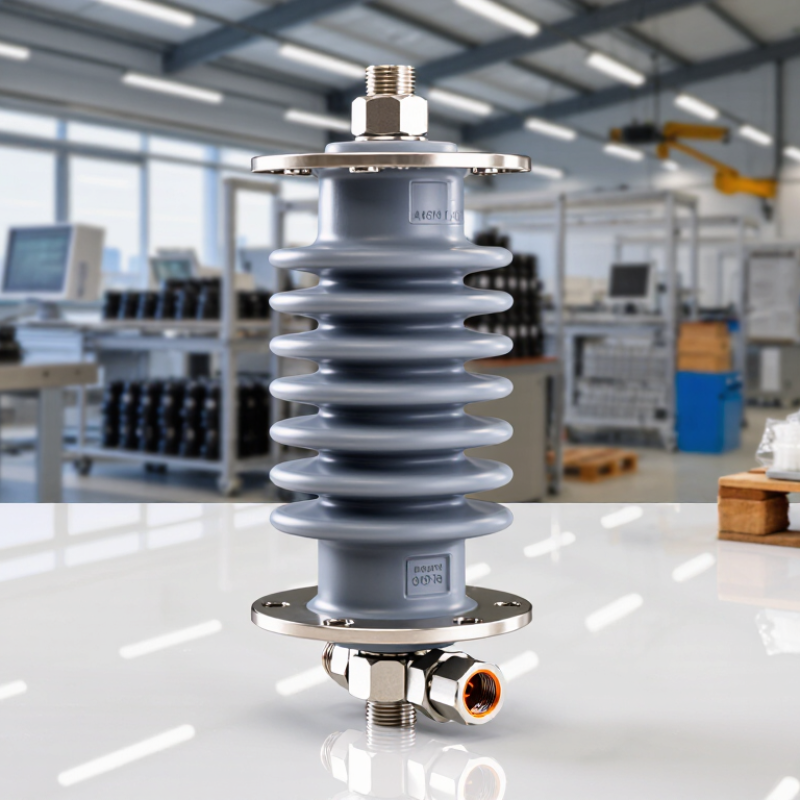
How to Choose the Best Lightning Arrester from China?

Define Arrester Types and Applications Under IEC 60099-4

How to Choose the Best Lightning Arrester from China?

Under IEC 60099-4:2014 and Amendment 1:2016, selection starts with the system, not the catalogue. For an arrester, confirm continuous operating voltage, rated voltage, residual voltage, energy capability, and line discharge class. The 8/20 μs current impulse test is central for standard discharge performance. High-current tests use a 4/10 μs impulse. These figures are not decoration.

CIGRE Technical Brochure 440 identifies thermal stability, ageing, and energy absorption as major evaluation areas for metal-oxide arresters. Select the type according to application: station-class units suit substations, while distribution-class designs fit lower-voltage networks. Cable connections, transformer terminals, overhead lines, and polluted coastal sites require different protection distances and sealing levels. Altitude matters too. So does grounding.

A neat table can still mislead. This is where many selections fail. For Chinese equipment, request IEC type-test reports, routine test records, discharge-voltage curves, and batch traceability. Check whether the reported tests cover the exact arrester design, not merely a similar model. IEC 60099-4 does not replace engineering judgment. A 10 kA rating alone proves little without Uc, energy data, and system coordination. Review the manufacturer’s GB/T 11032 compliance documents, since this Chinese standard is closely aligned with IEC requirements. Some documents remain incomplete. Ask difficult questions before approving the purchase.

Match MCOV to System Voltage and Grounding Conditions

How to Choose the Best Lightning Arrester from China?

Match MCOV to System Voltage and Grounding Conditions

MCOV means maximum continuous operating voltage. It is not simply the equipment’s nominal voltage. For a 10 kV system, engineers must check the highest system voltage, phase-to-ground voltage, and grounding method. In a solidly grounded network, the phase-to-ground value is usually close to line voltage divided by √3. However, ungrounded and resistance-grounded systems can experience higher temporary overvoltage. Their arrester may need a higher MCOV.

Small details matter. A 10 kV feeder with a 6.4 kV MCOV arrester may suit one grounded network, but not another with persistent earth faults. IEC 60099-4:2014 requires arrester performance testing under defined electrical stresses. IEEE C62.11-2020 also evaluates discharge behavior and protective characteristics. These standards should guide the technical comparison, not a catalogue’s lowest price.

Field inspections often reveal a practical mistake: engineers select MCOV from nominal voltage alone. That shortcut can cause thermal stress during a ground fault. NOAA’s National Severe Storms Laboratory states that a typical lightning flash carries about 30,000 amperes, while stronger flashes can exceed 100,000 amperes. Yet lightning current is only part of the risk. CIGRE Technical Brochure 549 emphasizes system grounding and temporary overvoltage when assessing surge protection. Confirm the transformer connection, fault-clearing time, earthing resistance, and expected switching events. I would also request test reports, because paperwork can be incomplete.

How to Choose the Best Lightning Arrester from China?

Match MCOV to System Voltage and Grounding Conditions

The chart shows the minimum continuous operating voltage screening basis for common medium-voltage systems. For effectively grounded systems, the arrester MCOV is referenced to the line-to-ground voltage (system voltage ÷ √3). For ungrounded or impedance-grounded systems, the full line-to-line voltage may appear across an arrester during a ground fault, so a higher MCOV is required. Final selection must also verify temporary overvoltage withstand, fault-clearing time, insulation coordination, and applicable IEC or local standards.

Compare 8/20 μs Nominal Discharge Currents: 5, 10, and 20 kA

How to Choose the Best Lightning Arrester from China?

The 8/20 μs nominal discharge current shows how a surge arrester handles a standard current impulse. A 5 kA arrester suits lighter exposure and smaller distribution systems. It may be adequate for protected buildings with short service lines and reliable grounding. A 10 kA model offers a practical balance for commercial facilities, workshops, and many outdoor cabinets. It provides greater surge-handling capacity without automatically increasing every other performance value. A 20 kA arrester is more suitable for high-exposure locations, long overhead lines, or installations near frequent thunderstorms. Bigger is not always better.

Check the complete specification, not only the kA figure. Confirm maximum continuous operating voltage, residual voltage, energy capability, housing material, and creepage distance. A 20 kA unit with unsuitable voltage can fail earlier than a correctly selected 10 kA unit. During supplier evaluation in China, request type-test evidence, routine inspection records, and traceable batch numbers. Inspect terminal tightness, sealing, and labeling before shipment. These small details matter in a wet electrical cabinet.

One warning remains important. Nominal discharge current is not the same as maximum surge current. The test waveform is standardized, while real lightning conditions vary. I have seen buyers compare only price and kA ratings. That approach is easy, but incomplete. Select the arrester after reviewing the system voltage, grounding design, exposure level, and installation distance. Five, ten, or twenty kA should serve the application, not the sales sheet.

How to Choose the Best Lightning Arrester from China? – Compare 8/20 μs Nominal Discharge Currents: 5, 10, and 20 kA

Engineering comparison of commonly specified Type 2 surge protective devices (SPDs)
Selection Factor 5 kA In 10 kA In 20 kA In
Nominal discharge current (In) 5 kA, 8/20 μs 10 kA, 8/20 μs 20 kA, 8/20 μs
Typical maximum discharge current (Imax) Commonly 10 kA Commonly 20 kA Commonly 40 kA
Typical installation position Downstream distribution boards and final sub-distribution panels Building distribution boards and commercial or industrial sub-panels Main distribution boards, industrial sites, and locations with higher surge exposure
Suitable electrical environment Low-to-moderate exposure with limited lightning activity and a short, coordinated upstream protection path General-purpose commercial, residential, and light-industrial installations High-exposure areas, long incoming cable runs, overhead-line connections, or sites with frequent switching surges
Typical protection concept Point-of-use or secondary surge protection Standard secondary protection for most low-voltage distribution systems High-duty secondary protection, often coordinated with an upstream Type 1 or Type 1+2 SPD where required
Common system voltage example 230/400 V AC systems using an appropriate Uc, often 275 V AC for line-to-neutral protection 230/400 V AC systems using an appropriate Uc, often 275 V AC for line-to-neutral protection 230/400 V AC systems using an appropriate Uc, often 275 V AC for line-to-neutral protection
Typical voltage protection level (Up) Often available at ≤ 1.5 kV, depending on the circuit configuration and test conditions Often available at ≤ 1.5 kV, depending on the circuit configuration and test conditions Often available around ≤ 1.8 kV, although lower values are also available in selected designs
Relative surge-handling margin Basic
Space and cost impact Usually the lowest cost and smallest solution Moderate cost with a practical balance between capacity and size Usually higher cost and may require a larger enclosure or wider DIN-rail footprint
Recommended choice when specifications are unclear Use only after a low-exposure assessment and coordination review Prefer when the installation has high lightning exposure or a higher consequence of equipment failure
Important verification before purchase Confirm Uc, Up, In, Imax, system earthing arrangement, short-circuit withstand, backup overcurrent protection, leakage current, enclosure protection, and compliance with the applicable edition of IEC 61643-11 or the required local standard.

Technical note: In is the nominal discharge current tested with an 8/20 μs current waveform. It is not the same as Iimp, which uses the 10/350 μs waveform commonly associated with lightning-current testing for Type 1 SPDs. The Imax, Up, and backup-fuse values shown above are typical market configurations rather than universal ratings; always verify the manufacturer’s test report and product datasheet before selection.

Evaluate Residual Voltage, Energy Rating, and Protection Level

How to Choose the Best Lightning Arrester from China?

When evaluating a lightning arrester, start with residual voltage, not only the purchase price. Residual voltage is the voltage left across protected equipment during a surge. Lower is generally safer, but coordination still matters. A device with an extremely low protection level may not suit every system voltage. Check the maximum continuous operating voltage and the equipment’s insulation rating together.

Ask Chinese manufacturers for test data under clearly stated conditions. The discharge current waveform, current amplitude, and test standard should be visible. IEC 61643-11 is commonly referenced for low-voltage surge protective devices. Do not accept a table showing “protection level” without its test current. That detail can change the meaning completely. In practical panel inspections, I have seen attractive specifications hide unclear testing methods.

Energy rating also deserves careful attention. It indicates how much surge energy the arrester can handle, but ratings are not always directly comparable. Review the nominal discharge current, maximum discharge current, and repeated-surge performance. For a solar plant or industrial cabinet, consider cable length, grounding quality, and exposure frequency. I once focused too heavily on energy capacity and overlooked poor grounding. The arrester performed below expectations. Request traceable reports, production-batch records, and inspection photographs before approval. Some suppliers may provide incomplete documents. That requires a second review.

Verify China Supplier Compliance with IEC 60099-4 and GB/T Standards

Choosing the best lightning arrester from China begins with supplier compliance, not price. IEC 60099-4 defines key requirements for metal-oxide arresters, including operating duty, residual voltage, and thermal stability. China’s GB/T 11032 covers comparable AC gapless metal-oxide arresters. Confirm the exact edition required for your project.

The risk is substantial. The World Meteorological Organization reports roughly 40–50 lightning flashes worldwide every second. A supplier’s certificate alone is not enough. In practical procurement reviews, I have learned that a neat certificate can hide an incomplete test scope. Request the full type-test report, laboratory accreditation to ISO/IEC 17025, and traceability to the offered model. Check rated voltage, maximum continuous operating voltage, nominal discharge current, and protection level. Ask for routine-test records from recent production batches. Type testing proves a design; it does not automatically prove every shipment.

Tips: Match the test report’s serial details, voltage class, and arrester construction with your purchase order. Verify whether GB/T 11032 testing was conducted under conditions comparable to IEC 60099-4. Inspect zinc-oxide varistor blocks, sealing systems, pressure-relief design, and polymer housing samples. Do not accept vague phrases such as “IEC compliant.” Ask which clauses were tested, by whom, and when. Some documents may be technically valid but outdated. That deserves a second review.

FAQS

What does MCOV mean in a lightning arrester?

MCOV means maximum continuous operating voltage. It is not simply the system’s nominal voltage. Check the highest system voltage and phase-to-ground voltage.

How does grounding affect MCOV selection?

Solidly grounded systems usually have lower phase-to-ground voltage. Ungrounded or resistance-grounded systems can experience higher temporary overvoltage. They may need a higher MCOV.

Can a 6.4 kV MCOV arrester protect every 10 kV feeder?

No. It may suit one grounded feeder but fail during persistent earth faults elsewhere. Confirm grounding, fault-clearing time, and transformer connections.

What is residual voltage?

Residual voltage is the voltage remaining across equipment during a surge. Lower residual voltage generally improves protection. Coordination with insulation ratings still matters.

What test information should suppliers provide?

Request the test current, waveform, current amplitude, and testing conditions. A protection-level table without test current is incomplete. Check it again.

How should an arrester’s energy rating be evaluated?

Review nominal discharge current, maximum discharge current, and repeated-surge performance. Ratings are not always directly comparable. Cable length and grounding also affect performance.

What details matter in a solar plant or industrial cabinet?

Consider surge exposure, cable length, grounding quality, and expected switching events. A high energy rating cannot compensate for poor grounding.

Which documents should be checked before approval?

Request traceable test reports, production-batch records, and inspection photographs. Some documents may be incomplete. A second review is sensible.

Why is choosing only by nominal voltage risky?

Nominal voltage alone ignores temporary overvoltage and grounding conditions. Thermal stress can develop during a ground fault. The shortcut looks convenient, but it is weak.

Does lightning current represent the entire protection risk?

No. A typical flash can carry about 30,000 amperes, while stronger flashes may exceed 100,000 amperes. System grounding and switching events also influence protection.

Conclusion

Choosing the best Lightning Arrester from China requires a structured evaluation of both technical performance and supplier reliability. Start by identifying the arrester type and intended application under IEC 60099-4, then confirm that its maximum continuous operating voltage (MCOV) matches the system voltage, neutral grounding method, and temporary overvoltage conditions. The nominal discharge current should also reflect the installation environment: 5 kA may suit lower exposure systems, while 10 kA or 20 kA can provide greater surge-handling capability where lightning activity or network risk is higher.

Beyond discharge current, compare residual voltage, energy withstand, and overall protection level to ensure the arrester can limit surges without unnecessary stress on connected equipment. Before placing an order, review test reports, technical drawings, routine inspection procedures, and quality-control records. A qualified Chinese supplier should clearly demonstrate compliance with IEC 60099-4 and applicable GB/T standards, provide traceable documentation, and offer specifications that remain consistent from sample testing through mass production.

Amelia

Amelia

Amelia is a seasoned marketing professional with a wealth of expertise in our company’s core offerings. With an unwavering passion for driving growth and innovation, she plays a pivotal role in shaping our marketing strategies and enhancing brand visibility. A key aspect of her responsibilities......