
Shu Guang
Zinc Oxide Arrester selection is becoming more important as grids absorb renewable power, longer transmission corridors, and sensitive digital equipment. The International Energy Agency’s Electricity Grids and Secure Energy Transitions report estimates that global grid investment must rise to more than USD 600 billion annually by 2030. It also warns that grid expansion and modernization are moving too slowly. These conditions increase the need for dependable surge protection at substations, transformers, distribution lines, and renewable-energy plants.
This guide introduces the 2026 arrester types most relevant to global buyers. It compares station-class, intermediate, and distribution arresters, including polymer-housed and porcelain designs. Each type has a different balance of discharge capability, insulation coordination, mechanical strength, sealing performance, and lifecycle cost. IEC 60099-4 remains a key reference for metal-oxide surge arresters, while IEEE C62.11 supports testing and application decisions in many markets. CIGRE technical publications also emphasize system studies, temporary overvoltage, pollution, and installation conditions.
The practical details matter. A buyer should verify continuous operating voltage, rated voltage, nominal discharge current, line-discharge class, creepage distance, altitude rating, and pressure-relief behavior. Outdoor equipment may face salt fog, dust, freezing rain, or intense ultraviolet exposure. A factory test certificate helps, but it does not replace correct system coordination. That point is often underestimated. Some product comparisons focus too heavily on price and catalogue energy ratings. This can create a false sense of security. Reliable procurement requires traceable test records, qualified manufacturers, realistic site data, and a careful review of future network changes. No single Zinc Oxide Arrester design fits every grid.
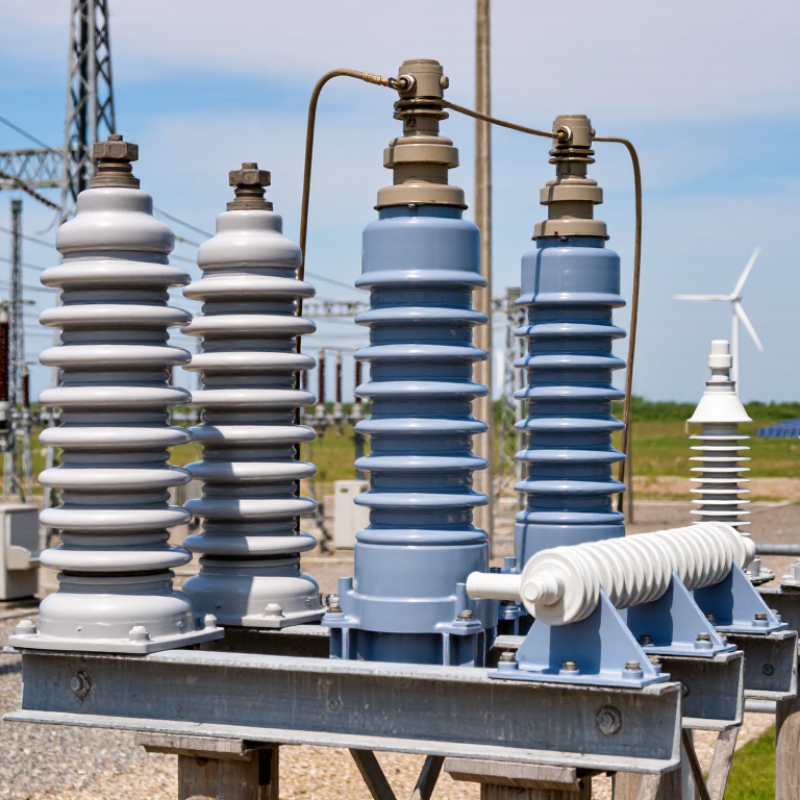
A zinc oxide arrester protects electrical equipment from lightning and switching overvoltages. It uses zinc oxide varistor blocks with highly nonlinear resistance. At normal system voltage, the blocks carry only a tiny leakage current. During a surge, their resistance drops sharply. Current flows.
The arrester then diverts excess energy toward earth within microseconds. Its voltage does not fall to zero, however. The remaining clamping voltage must stay below the insulation level of transformers, cables, and switchgear. IEC 60099-4 defines performance tests for metal-oxide surge arresters, including residual voltage, energy handling, and thermal stability. CIGRE technical guidance also stresses leakage-current monitoring and ageing evaluation. Field conditions matter more than catalogue claims.
The IEA Electricity 2024 report projects global electricity demand growth of about 3.2% annually through 2026. More energized networks mean more exposure to temporary and transient overvoltages. Global buyers commonly compare station-class, distribution-class, and line arresters. Polymer housings reduce weight and improve handling. Porcelain housings can offer strong mechanical stability in severe environments. Neither choice is automatically superior.
Check altitude, pollution, humidity, grounding resistance, and short-circuit capability. A practical inspection may reveal cracked seals, contamination, or rising leakage current. Reports often use different market definitions, so their forecasts should be questioned. My field-oriented view is simple: selection should follow the system’s insulation coordination, not a fashionable arrester type.
Zinc oxide arresters protect electrical equipment from lightning and switching surges. Their main type is the gapless metal-oxide arrester, which responds quickly without a series spark gap. Distribution arresters suit pole-mounted transformers, compact substations, and overhead lines. They are lightweight and economical for medium-voltage networks.
Station-class arresters provide stronger energy absorption near generators, transformers, and large switchgear. Intermediate-class models balance protection and cost for substations and industrial feeders. Polymer-housed arresters resist moisture and surface contamination. Porcelain-housed designs remain mechanically stable in demanding outdoor locations. However, housing choice alone does not guarantee long service life. Site pollution, altitude, grounding quality, and thermal stress also matter.
Tips: Match the arrester’s continuous operating voltage with the system voltage. Check discharge current, energy capability, creepage distance, and pressure-relief performance. For coastal or dusty sites, inspect sealing details carefully. A lower purchase price can create higher maintenance costs. I have seen specifications selected correctly but installed with weak grounding, reducing real protection. That detail deserves more attention. Global buyers should request tested data, installation guidance, and clear quality records before approval.
In 2026, global buyers are comparing zinc oxide arresters by tested performance, not housing appearance. The core element is a nonlinear ZnO varistor, which diverts surge current and limits residual voltage. Check rated voltage, maximum continuous operating voltage, discharge current, and energy capability together. One number is never enough. Station, line, and distribution types suit different insulation levels, fault duties, and installation environments.
IEC 60099-4 remains a key reference for metal-oxide surge arresters without gaps. IEEE C62.11 is also used widely in many procurement specifications. Buyers should request evidence for switching impulses, lightning impulses, thermal stability, ageing, and pressure-relief tests.
Test reports need clear sample ratings and laboratory conditions. Otherwise, comparison becomes unreliable. Standards may overlap, but their test methods and acceptance details are not always identical.
Field selection requires more than a certificate. Measure system grounding, temporary overvoltage, pollution severity, altitude, and available short-circuit current. Polymer housings can reduce shattering risk, while porcelain may offer familiar mechanical behavior. Both require correct sealing and disciplined inspection. Look for low leakage current, stable thermal behavior, corrosion resistance, and visible pressure-relief paths. In practice, installation torque and earthing connections often receive too little attention. That weakness is easy to miss. An experienced buyer should leave room for uncertainty, because catalogue values cannot reproduce every grid event.
How to Select the Right Zinc Oxide Arrester for Your System
Choosing a zinc oxide arrester starts with system conditions, not price. Confirm the maximum continuous operating voltage, rated voltage, grounding method, and temporary overvoltage duration. IEC 60099-4 requires performance verification through current, aging, and energy-duty tests. These tests help compare practical protection margins. However, catalogue values alone can mislead. Cable length, transformer impedance, and switching events also affect arrester stress.
The IEA Electricity 2024 report expects global electricity demand to grow by about 4% annually through 2026. More generation and transmission equipment means more exposure to lightning and switching surges. For medium-voltage systems, compare nominal discharge current, residual voltage, and energy capability. For substations, check line discharge class, short-circuit coordination, pollution level, and altitude correction. CIGRE guidance also supports reviewing arrester aging, leakage current, and thermal stability during maintenance. Field conditions are rarely perfect.
Tips: Measure the actual phase-to-ground voltage first. Select MCOV above sustained operating voltage, but avoid excessive protection gaps. Check grounding resistance and expected temporary overvoltage. In coastal or dusty sites, prefer suitable housing creepage distance. Record leakage current trends during inspections. A small installation error can defeat a technically strong arrester. One point deserves reflection: many selections rely on assumed fault data. Obtain utility records whenever possible, then reassess the choice after commissioning.
How to Select the Right Zinc Oxide Arrester for Your System
The chart shows representative nominal discharge-current ratings commonly associated with major zinc oxide arrester applications. Distribution arresters are typically selected at 5–10 kA, substation arresters around 10 kA, and transmission arresters commonly at 20 kA. Final selection must also consider the system maximum continuous operating voltage, temporary overvoltage, insulation coordination, energy duty, altitude, pollution level, and applicable requirements such as IEC 60099-4.
2026 Top Zinc Oxide Arrester Types for Global Buyers
Zinc oxide arresters serve distribution, substation, industrial, and renewable-energy networks worldwide. Common choices include station-class, intermediate, and distribution-class designs. Polymer housings suit coastal or dusty locations because they resist shattering and reduce handling weight. Porcelain housings remain useful where mechanical strength and established maintenance routines matter. Selection depends on system voltage, temporary overvoltage, insulation coordination, altitude, pollution, and expected lightning activity. A higher energy rating is not automatically safer.
Installation details strongly affect service life. Install the arrester close to the protected transformer, cable termination, or switchgear. Keep phase and grounding leads short, straight, and separated from sharp bends. Use a low-impedance earth connection. Confirm phase-to-ground clearances, mounting strength, terminal torque, and local environmental conditions. In high-altitude installations, reduced air density can change external insulation performance. Site records should include test values and photographs. Small omissions become expensive later.
Maintenance teams usually inspect housings for cracks, contamination, corrosion, loose fittings, and tracking marks. Leakage-current checks, infrared surveys, and event-counter readings can reveal developing stress. Test after major lightning activity or unusual system faults. Replace units showing mechanical damage, abnormal heating, or persistent electrical changes. However, leakage readings vary with temperature, humidity, and harmonics. One measurement can mislead. I have seen clean-looking arresters fail after repeated moisture exposure, while a dirty unit continued operating normally. That is why trend records matter more than isolated results. Perform reviews carefully.
| Arrester Type | Typical Voltage Class | Primary Global Applications | Typical Installation Location | Key Selection Parameters | Installation Practices | Maintenance Requirements |
|---|---|---|---|---|---|---|
| Station-Class Gapless ZnO Arrester | Medium- to high-voltage systems; commonly above 36 kV | Transmission substations, power plants, large industrial substations, transformer protection | Substation bus, transformer terminals, line entrances and capacitor-bank connections | System maximum voltage, continuous operating voltage (MCOV), nominal discharge current, lightning and switching energy, protective level, creepage distance | Install as close as practical to protected equipment; keep connecting leads short and straight; provide a low-impedance earth connection; observe phase-to-ground clearances | Periodic visual inspection, earth-connection checks, leakage-current or thermal monitoring where specified, and inspection after major surge events |
| Line-Discharge-Class Arrester | Medium- and high-voltage overhead networks | Overhead transmission and distribution lines, cable transitions, railway supply networks | Pole structures, line dead ends, cable terminations and transition towers | Line-discharge class, temporary overvoltage withstand, line-to-ground voltage, mechanical load, pollution level and insulation coordination | Use approved brackets and clearances; provide a direct down-lead to the pole or station earth; avoid sharp bends and unnecessary lead length | Visual checks during line patrols, inspection for cracks or contamination, verification of loose hardware and examination after lightning-related outages |
| Distribution-Class Gapless ZnO Arrester | Typically below 36 kV, including common 3 kV to 24 kV distribution systems | Utility feeders, distribution transformers, industrial feeders and renewable-energy collection systems | Transformer high-voltage terminals, feeder poles, switchgear and cable risers | MCOV, rated voltage, nominal discharge current, energy capability, housing material, pollution class and system grounding method | Mount close to the transformer or equipment; minimize phase and earth lead lengths; verify correct connection for solidly grounded, resistance-grounded or isolated systems | Routine visual inspection, cleaning when contamination is significant, checking terminal torque and replacement when the indicator or disconnector operates |
| Secondary or Low-Voltage ZnO Arrester | Low-voltage AC and DC circuits; commonly up to 1 kV AC | Control panels, building services, industrial automation, instrumentation and low-voltage power distribution | Main distribution boards, subpanels, equipment inlets and control cabinets | Maximum continuous operating voltage, nominal discharge current, short-circuit rating, residual voltage, response category and backup overcurrent protection | Install in accordance with the applicable low-voltage installation standard; keep conductors short; coordinate upstream protection and provide safe disconnection space | Check status indicator, protective device condition, terminal tightness and enclosure temperature; replace after end-of-life indication or major surge exposure |
| Transformer-Neutral ZnO Arrester | Medium- and high-voltage transformer neutral circuits | Power transformers, autotransformers and reactors with reduced neutral insulation levels | Between transformer neutral and station earth, subject to the transformer insulation-coordination study | Neutral voltage, system grounding impedance, temporary overvoltage duration, neutral insulation level, discharge energy and short-circuit forces | Confirm the neutral-to-earth voltage profile before selection; use a short earth path; maintain transformer bushing and enclosure clearances | Inspect housing and terminals, verify earth continuity, review operating records and perform condition assessment according to the transformer maintenance program |
| Cable-Termination ZnO Arrester | Medium-voltage distribution and sub-transmission circuits | Underground cable feeders, overhead-to-underground transitions and motor cable protection | At cable riser poles, switchgear cable compartments, transformer cable boxes and motor terminals | Cable insulation level, system grounding, MCOV, impulse withstand, cable sheath bonding and available fault current | Position at the transition or equipment terminal; coordinate with cable screen bonding; use manufacturer-approved torque and sealing procedures | Inspect seals, cable connections, housing condition and earth continuity; check for moisture ingress and signs of thermal or electrical stress |
| Renewable-Energy and Converter-Side ZnO Arrester | Low- to medium-voltage AC and DC circuits, depending on the application | Solar photovoltaic plants, wind farms, battery systems, converters and collector substations | Combiner boxes, inverter AC/DC terminals, collector switchgear and step-up transformer interfaces | AC or DC operating voltage, polarity, maximum PV system voltage, converter switching transients, fault current and coordination with upstream protection | Use devices specifically rated for the circuit type; maintain polarity and creepage requirements; separate power and control wiring where required | Inspect status indicators, enclosure ventilation, connectors and earthing; replace failed modules promptly to limit downtime and repeat damage |
| Pollution-Resistant Polymer-Housed ZnO Arrester | Low- to high-voltage outdoor networks | Coastal, desert, industrial and high-altitude installations where contamination or mechanical handling is a concern | Outdoor substations, line structures, coastal switchyards and exposed transformer connections | Specific creepage distance, hydrophobicity, UV resistance, seismic or cantilever load, altitude correction and pollution severity | Select the creepage distance for the site pollution level; avoid damage to the polymer housing; follow specified lifting, orientation and torque requirements | Inspect for erosion, tracking, puncture, cracks, contamination and corrosion; clean only with approved methods and do not use abrasive materials |
It protects electrical equipment from lightning and switching surges. Common locations include transformers, overhead lines, substations, and industrial feeders. The device responds quickly without a series spark gap.
Distribution-class arresters usually fit pole-mounted transformers and compact substations. They are lightweight and economical. Check the system voltage and expected surge energy before choosing one.
Station-class arresters suit generators, large transformers, and major switchgear. They absorb higher surge energy. Their cost is higher, but weak protection near critical equipment can become expensive.
Polymer housings resist moisture and surface contamination. They are also lighter and less likely to shatter during handling. Porcelain housings provide strong mechanical stability outdoors. Housing material alone does not guarantee long service life.
Confirm continuous operating voltage, rated voltage, discharge current, and residual voltage. Review energy capability and pressure-relief performance. Also check creepage distance, altitude correction, and temporary overvoltage duration.
Install it close to the protected transformer, cable termination, or switchgear. Keep phase and grounding leads short and straight. Use a low-impedance earth connection. Long, sharply bent leads can reduce real protection.
Inspect housings for cracks, contamination, corrosion, loose fittings, and tracking marks. Record leakage current, infrared results, and event-counter readings. Test after major lightning activity or unusual faults. One reading can mislead.
Poor grounding can defeat a technically strong arrester. Incorrect assumed fault data can also cause selection errors. Coastal moisture, dust, altitude, and thermal stress deserve careful review. The cheapest option may create higher maintenance costs.
A Zinc Oxide Arrester is a critical protective device designed to limit transient overvoltages caused by lightning, switching operations, and electrical faults. Using the nonlinear voltage-current characteristics of zinc oxide resistor elements, it conducts surge energy safely to ground while remaining highly resistive during normal system operation. This article reviews major types for global applications, including distribution, station, line, and specialized system arresters, with attention to housing design, voltage ratings, energy-handling capability, pollution resistance, and environmental durability.
It also explains key technical features and the importance of selecting products that meet applicable international performance and testing standards. Proper selection should consider system voltage, grounding configuration, insulation coordination, surge exposure, installation location, and expected operating conditions. Practical guidance covers outdoor and indoor installation, grounding quality, clearance, mechanical support, inspection, leakage-current monitoring, and replacement planning. By combining accurate system assessment with suitable installation and maintenance practices, users can improve equipment protection, operational reliability, and long-term electrical safety.